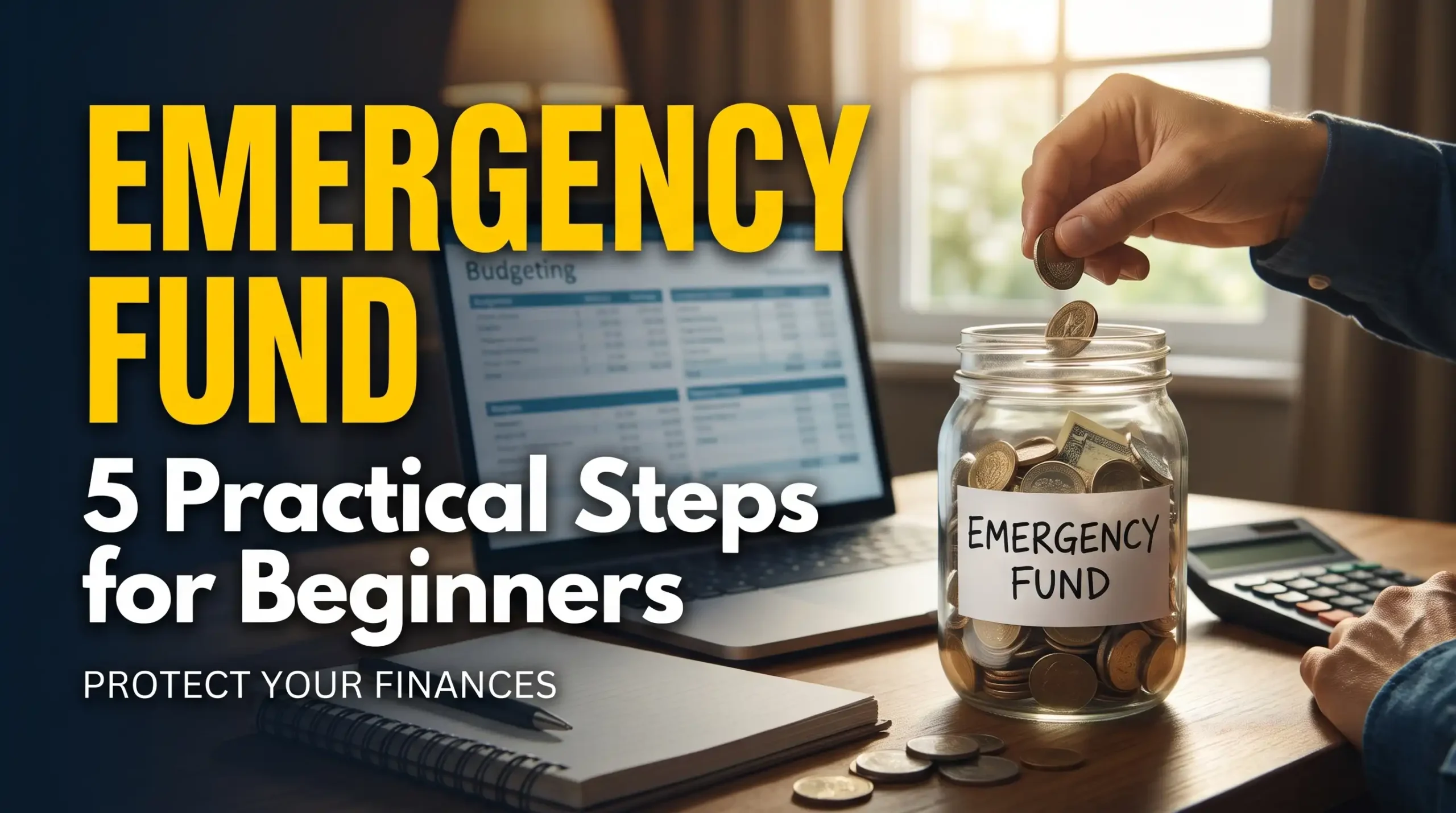
Unexpected expenses are an inevitable reality of adult life. Whether it is an unforeseen car repair, a sudden medical bill, or a temporary job disruption, financial emergencies rarely announce themselves before striking.
Without a dedicated cash reserve, even minor disruptions often force individuals onto high-interest credit cards or personal loans. Learning how to build an emergency fund is the foundational shield that turns a potential crisis into a minor financial inconvenience.
Even if you are currently living paycheck to paycheck, establishing a safety cushion is entirely manageable when approached with a structured plan. Here is your complete guide on how to build an emergency fund from scratch.
What Is an Emergency Fund?
According to Investopedia’s financial guidelines, an emergency fund is a stash of liquid cash set aside solely for unexpected, essential expenses. It is not an investment account, nor is it a discretionary savings pool for vacations or holiday gifts.
To qualify as an emergency, an expense must satisfy three strict criteria:
- Unexpected: You could not have planned for it ahead of time.
- Necessary: It directly impacts your health, safety, or ability to earn income.
- Urgent: It demands immediate payment and cannot be postponed.
How Much Money Should You Keep in an Emergency Fund?
The standard guideline recommended by financial advisors is keeping **3 to 6 months of essential living expenses**. However, you should break this long-term milestone into two distinct phases:
- Phase 1: The Starter Fund ($1,000 to $2,000)
Your immediate objective is to accumulate a quick $1,000 to $2,000 safety cushion as rapidly as possible. This stops you from relying on debt for common surprises while you pay off existing credit balances. - Phase 2: The Fully Funded Reserve (3 to 6 Months)
Once high-interest credit card debt is resolved, expand your reserve to cover 3 to 6 months of baseline living costs (rent, utilities, groceries, and basic transportation).
5 Steps: How to Build an Emergency Fund
Step 1: Calculate Your Monthly Baseline Expenses
Do not calculate your emergency target based on your total income. Instead, determine your bare-bones survival budget—what you need to keep the lights on and food on the table if your primary income stopped today.
If you have already implemented a zero-based monthly budget, you already know your exact non-negotiable living numbers.
Step 2: Open a High-Yield Savings Account (HYSA)
Never leave your emergency reserves inside your primary checking account where it can be accidentally spent. Likewise, avoid locking it inside volatile stock markets or illiquid certificates of deposit (CDs).
The ideal home for an emergency reserve is a High-Yield Savings Account (HYSA) at an insured online bank. A HYSA provides immediate liquidity while generating far higher annual percentage yields (APY) than traditional brick-and-mortar savings accounts.
Step 3: Automate Your Micro-Deposits
Relying on willpower to save money at the end of the month rarely works. Configure an automatic recurring transfer from your checking account to your dedicated savings account on the morning each paycheck arrives.
Even starting with as little as $25 or $50 per week builds psychological momentum and sets a consistent habit.
Step 4: Audit Discretionary Subscriptions and Outflows
Accelerate your initial $1,000 target by temporarily pruning non-essential costs for 60 to 90 days:
- Pause redundant streaming services and entertainment memberships.
- Commit to weekly meal preparation to curb impulse takeout deliveries.
- Sell unused electronics, furniture, or clothes online.
Step 5: Direct Windfalls and Tax Returns Straight to Savings
Anytime you receive irregular financial windfalls—such as tax refunds, workplace performance bonuses, or side-hustle profits—deposit at least 50% directly into your emergency reserve before factoring it into lifestyle upgrades.
Emergency Fund Target Breakdown
| Target Stage | Target Amount | Primary Purpose |
|---|---|---|
| Starter Fund | $1,000 – $2,000 | Immediate protection against small repairs and unexpected bills |
| 3-Month Reserve | $6,000 – $10,000 | Suitable for dual-income households with stable corporate jobs |
| 6-Month Reserve | $12,000 – $20,000 | Recommended for single earners, freelancers, and commission workers |
Frequently Asked Questions (FAQ)
Should I pay off debt before building an emergency fund?
You should build a beginner starter fund of $1,000 first. This prevents you from taking on new debt when small surprises arise. Once that safety cushion is secured, channel extra cash toward high-interest credit card debt.
Where should I never keep an emergency fund?
Never invest your emergency fund in the stock market, cryptocurrency, or real estate. You need guaranteed capital preservation and same-day liquidity without risk of market downswings.
Final Thoughts
Mastering how to build an emergency fund is less about mathematics and more about peace of mind. By taking incremental, automated steps today, you gain insulation against life’s uncertainties and establish a permanent foundation for long-term financial independence.